![Bitcoin [News Pool]](https://dohodvseti24.ru/wp-content/uploads/2021/03/onlajn-novosti-o-bitkoine-logotip.png)

Central banks are seeking to strengthen their role as regulators of monetary policy by introducing state-owned digital currencies. Let's talk, why this will lead to tighter regulation of cryptocurrencies.
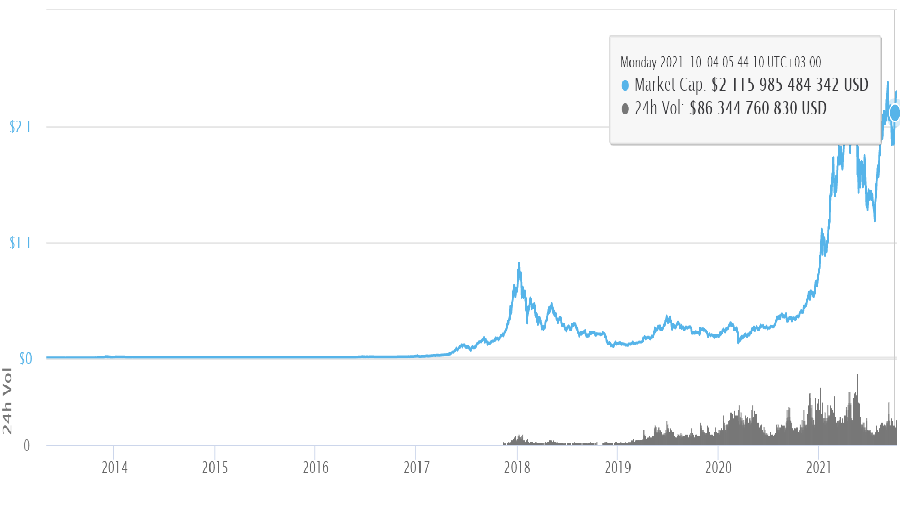
In just a few years, cryptocurrencies have evolved from digital exotics into the global market with a capitalization of more than
$2 trillion. Proponents of cryptocurrencies see them as a democratizing force, which deprives“Wall Street tycoon” the possibility of uncontrolled money emission and excludes total control by regulators. For opponents they are a demonic force, capable of blowing up the global financial system.
Regulatory responses vary widely around the world: some governments accept
cryptocurrencies as legal tender, others prohibit or restrict their use.
Trying to defend the status quo, Central banks of many countries are considering
possibility of introducing your own digital currency, known as central bank digital currency (CBDC). Let's try to figure it out, for what reason are central banks interested in creating a new financial instrument, alternative to cryptocurrency, and how the introduction of a national digital currency will affect the cryptocurrency market.
Formation of an environment for digital currencies of the Central Bank
Central bank of any country – mega-regulator, responsible for the efficiency of the state's financial system. Not only the activities of commercial banks are under his control, but also insurance companies, investment funds and microfinance organizations. The Central Bank controls the supply of securities and regulates the activities of professional stock market participants. Governments and state bodies correlate their decisions with the position of the central bank when preparing legislative acts.. But due to the transition to a digital economy, the role of central banks may change dramatically.
Development of information technologies, post-pandemic changes in consumer preferences of financial market participants, remote jobs, conscious choice of citizens of many countries in favor of online services and payments, bring the digital economy to a new qualitative level of development. Money, while maintaining its fundamental content - the equivalent of value and means of payment, - completely lose their physical shape, transforming into a virtual analogue.
An additional impetus for the transition process is given by the policy of government agencies to limit the volume of cash payments. Tightening banking regulation, virtualization of traditional financial assets and high competition give rise to the creation of forms of non-bank financial intermediation (NBFO), which operate with a surrogate digital equivalent of the cost of goods and services.
Additional pressure on the financial market is exerted by decentralized cryptocurrency assets and their derivatives, which have become widespread and have become self-sufficient participants in financial transactions, independent of traditional banking structures.
In this model, the Central Bank of the country ceases to act as a regulator of monetary policy, and commercial banks are losing their functions as financial intermediaries between the state and the end consumer.
Regulator's reaction and prerequisites for the emergence of CBDC
For the central bank, a similar development scenario, where he is given the place of a static observer, unacceptable, and the negative reaction to the change of roles and transformation of the banking system is natural. therefore, faced with a problem, central banks have begun to develop and implement measures, necessary to support the financial stability of the banking industry.
Primarily, this is a political response and working with public opinion. There must be a conviction in society, supported by legislative acts, that any exchange transactions involving non-bank financial assets, including cryptocurrencies, unless they are stock market instruments (promotions, bonds, etc.), goods or property, refer to illegal financial activities. Cryptocurrencies have no fundamental
values and cannot perform the functions of money. Payments for goods and services in cryptocurrency equivalent are prohibited and punishable by law.
Many governments understand, that the Chinese version of a direct ban
on transactions with cryptocurrencies will cause a wave of protests from the crypto community and will not exclude their execution outside the sphere of state control, in the "gray zone". Therefore, regulators act according to a “softer” scenario: limit the applications available for cryptocurrencies, equating
them to securities market instruments, goods or property.
Cryptocurrencies, as a new asset class, прошли проверку временем и доказали свою состоятельность в качестве альтернативы традиционным инструментам хранения и накопления богатства. Поэтому второй потенциальный ответ на запрос общества на владение и расчеты в криптовалютах заключается в том, that central banks themselves will switch to digital technologies and develop a standard for their own digital currency, thereby retaining the mandate of the monetary policy regulator.
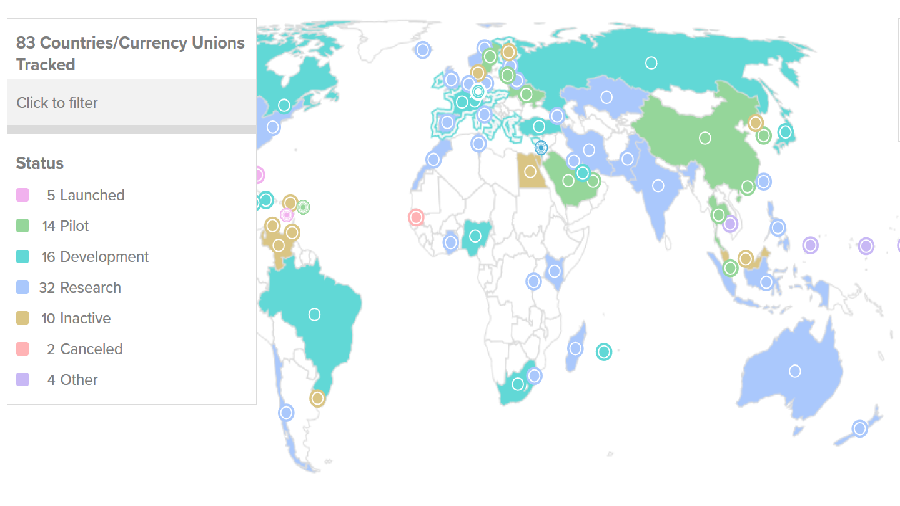
US central banks announced work on state cryptocurrency projects, China, EU, England, Canada, Switzerland and dozens of other countries. Some of the Central Banks have already started
to the pilot stage
implementation of state cryptocurrencies in various sectors of the economy. For now 5 countries have implemented
Central Bank digital currencies, but 14 countries are conducting pilot tests. In total 83 countries are considering introducing CBDC into their economies – 16 from these countries are under development, but 32 – at the research stage. For reference: these countries account for more 90% world gross domestic product.
In addition to convenience and reduced transaction costs, As an advantage of the Central Bank’s digital currency over competing crypto-assets, attention is drawn to the guaranteed safety of use and accessibility of this form of money. С позиции регулятора, цифровая валюта центрального банка – это не криптовалюта, а третья форма денег, наравне с наличной и безналичной формой. Она дополняет традиционные формы денег, а не заменяет их, как в случае с криптовалютами.
Введение в финансовый оборот цифровой валюты ЦБ сохранит руководящую роль центрального банка, and financial intermediaries will provide client services to the same extent, how they did it before its introduction.
Reasons for criticism of cryptocurrencies by regulators
Большая часть претензий регуляторов в отношении криптовалют и криптовалютного рынка, сосредоточены в области спекулятивных настроений, несоблюдения налогового законодательства или возможности совершения противозаконных операций. При этом глубинные причины, which the regulatory body pays attention to and the consequence of which may be a global change in the role of global financial institutions, remain outside the scope of discussion.
Possibility of merging the cryptocurrency industry with NBFIs
According to the report
European Financial Stability Board (FSB) on monitoring companies in the non-banking financial services sector (NBFO), back to the beginning 2021 year they account for more than half of the world's financial assets. При этом только в еврозоне за последнее десятилетие эти активы удвоились и достигли €48 трлн.
Дополнительную озабоченность вызывает быстрый рост децентрализованных финансовых платформ и цифровых активов, таких как стейблкоины и криптовалюты. Пока эти два направления мало пересекаются, но финансовый сектор может ожидать серьезное потрясение, если сойдутся две внутренне взаимосвязанные, но до сих пор параллельные тенденции. On the one side, глобальные технологические компании, такие как Google, Amazon, Facebook, Alibaba и Apple, которые уже предлагают пользователям финансовые услуги, с другой – криптовалюты и децентрализованные финансовые платформы.
Assuming, that large companies, considering their impact on society, an extensive customer base and access to unique information, will begin to issue their own cryptocurrencies (Diem) или использовать в расчетах стейблкоины, функционирование глобального финансового рынка изменится окончательно. По этой причине, во избежание системного финансового кризиса, центральные банки призывают правительства и государственные учреждения к усилению контроля в отношении деятельности новых глобальных игроков.
Потеря денежного суверенитета
Cryptocurrency, used to accumulate wealth and conduct financial transactions, if we allow its uncontrolled development, can replace sovereign money in financial circulation. As a result, платежная система страны будет зависеть от технологий, разработанных и регулируемых вне ее юрисдикции.
Отсутствие инструментов государственного контроля автоматически делает платежную систему непригодной для поддержки целостности финансового рынка и единой валюты страны, and also vulnerable to external disruptions and criminal attacks, such as hacker attacks. Additionally, the country faces potential problems in the fight against money laundering, с контролем операций по финансированию терроризма и уклонением от уплаты налогов.
Волатильность криптовалют и риск финансовых потрясений
Криптовалюты не содержат в своей основе фундаментальной ценности, поэтому с экономической точки зрения неясно, какая именно доля ценности передается при совершении финансовых транзакций. Фиксация в блокчейне информации о предыдущих транзакциях относится только к номинальному количеству переданных единиц криптовалюты. The current exchange rate of crypto assets against fiat currency can only be clarified by referring to reference data, provided by cryptocurrency exchanges.
According to banking analysts, the current market price of cryptocurrencies is determined by a speculative bubble, fashion, curiosity, or the charm of anonymity. There is no traceable dependence of the price of cryptocurrencies on changes in fiat currency exchange rates, stock and commodity prices or other macroeconomic factors, которые традиционно влияют на состояние финансовой среды.
Цены на любую криптовалюту могут резко взлететь после заявления медийных личностей, or fall due to suspected fraud, hacking or identified vulnerability. Moreover, independent studies have shown, что криптовалюта вовсе не безопасное убежище во время рыночной турбулентности. Не склонные к риску инвесторы в периоды кризиса уходят
from cryptocurrency markets in favor of safe financial assets.
The influence of the Central Bank's digital currencies on the cryptocurrency market
В значительной степени проекты государственных цифровых валют были вдохновлены развитием технологий и широкой популярностью криптовалют.
The digital currency of the Central Bank and public cryptocurrency in their content are two fundamentally different phenomena. Central bank currency imitates the basic functions of cash, that is, it serves as an official means of payment, exchange and savings. Cryptocurrencies, according to regulators, recognized as a special form of investment assets. In this way, no reason, why CBDC and cryptocurrencies cannot coexist. Appearing in different niches of the financial market, both assets do not compete, but complement each other.
Assumption, that cryptocurrencies will take on the role of a monetary instrument in the foreseeable future, untenable. First of all, due to a potential systemic financial crisis. Secondly, the use of the Central Bank digital currency in calculations provides certain advantages to the regulator compared to cryptocurrency transactions: lack of anonymity of transaction participants, tracking transactions for AML purposes (anti-money laundering) and increased government control over private transactions.
There is a possibility, that the release of CBDC will displace cryptocurrencies from the main financial markets, which in comparison with the digital currency of the Central Bank will be useless, uncontrollable, expensive and high-risk asset. Слабо выдерживает критику и отсыл к анонимности криптовалют как их ключевому свойству. Криптовалюты не настолько анонимны, как принято считать. Участники крипторынка оставляют за собой цифровой след, а регулирующие и правоохранительные органы обладают возможностью отслеживания, пусть и не полного, транзакций не только преступников и террористов, но и законопослушных пользователей.
Есть несколько вариантов того, как появление цифровых валют центральных банков отразится на мировом финансовом рынке. Цифровые валюты ЦБ могут сосуществовать одновременно с криптовалютами или их внедрение уничтожит криптовалютную отрасль. Однако уже ясно, что роль ЦБ в регулировании оборота цифровых активов будет усиливаться, а криптовалютным инвесторам стоит заранее готовиться к ужесточению контроля со стороны государства.