![Bitcoin [News Pool]](https://dohodvseti24.ru/wp-content/uploads/2021/03/onlajn-novosti-o-bitkoine-logotip.png)
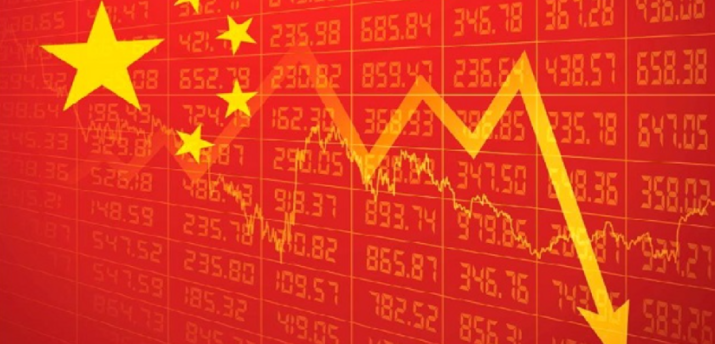
Evergrande Group, largest developer in China, teetering on the brink of default. Will this be the beginning of a new crisis, similar to what happened in 2008, when the largest bank Lehman Brothers collapsed and many others?
Growing crisis in China as a prerequisite for a ban on turnover Cryptoactives
Over the past years, experts have recorded a gradual slowdown in the development of China's economy. The IMF predicts a further decline in economic growth due to tightening financial regulation and intensifying trade disputes with the United States. Another negative effect of rapid industrialization is the shortage of energy resources.
China's largest developer – China Evergrande Group, collided
with a liquidity crisis and is quickly becoming the biggest financial problem in the country. The collapse of the asset owner $ 200 billion and liabilities of more than $ 300 billion could cause a serious shock to China's financial system and trigger a new global economic crisis.
For comparison, $300 billion – this is the entire GDP of countries like Ireland, Denmark, Hong Kong or Portugal. And it's just a duty, which Evergrande has. After Evergrande's credit rating was downgraded, trading in onshore corporate bonds had to be suspended., which is another warning sign, indicating impending default. Since Evergrande owns almost 2% all Chinese real estate, bonds also fell in price, issued by almost all Chinese developers. 8 September Fitch Ratings announced, that Evergrande's default seems likely.
Position of the Chinese authorities
Sad coincidence: 15 september 2008 Lehman Brothers collapsed, which was the worst economic event since the Great Depression. The crisis has affected not only the USA and Europe, but it reached Russia.
In the events with Lehman Brothers, the world economy lost $600 billion, Evergrande has assets and non-performing debts of $500 billion, which is comparable in scale.
maybe, that the extremely tough position of the Chinese authorities towards miners and the Chinese cryptocurrency community, in addition to the launch of the state cryptocurrency, was a measure to prepare the country for the upcoming systemic crisis. Thus, the fundamental possibility of the flight of Chinese capital from traditional financial instruments to a cryptocurrency haven was stopped, not controlled by the state.
Tether Comments
Australian economist David Llewellyn-Smith (David Llewellyn-Smith) suggested, that leading stablecoin issuer Tether may have had access to commercial paper, released by Evergrande. In turn, the representative of Tether
denied this assumption and reported, that the company does not own Evergrande commercial paper and has never acquired debt or securities, released by Evergrande. The vast majority of commercial paper, owned by Tether, “owned only by issuers rated A-2 or higher.”
Previously audit firm Moore Cayman, based in the Cayman Islands, confirmed, that Tether has enough assets to cover the entire emission of USDT tokens. The auditor's report states, that Tether's total consolidated assets amount to $62.7 billion., which exceeds total consolidated liabilities, which constitute $62.7 billion.
ATether states, that does not own commercial paper, released by Evergrande. However, crypto community analysts suggest, that stock market turmoil can have such wide-ranging consequences, which will be reflected on Tether, and on the global crypto industry.
Since any cryptocurrency is a high-risk asset, then large holders and retail traders will be the first to dump these assets in case of danger, returning to fiat or precious metals.